
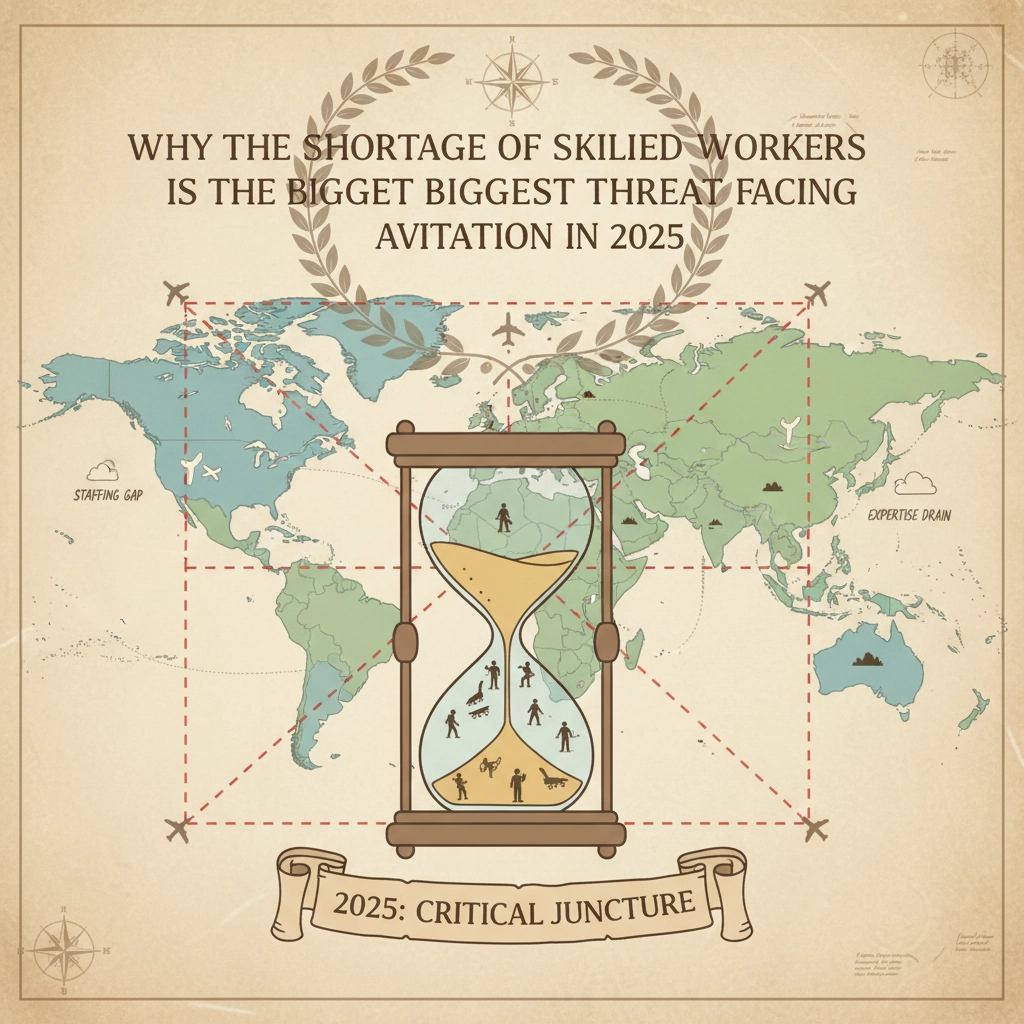
The aviation industry is facing its most critical challenge yet in 2026, and it's not what you might expect. While cyber threats, supply chain issues, and fuel costs grab headlines, there's a quieter, ongoing crisis brewing that threatens to ground the entire industry: we're running out of skilled workers.
This aviation workforce shortage isn't just affecting major airlines, it's rippling through flight schools, maintenance shops, air traffic control towers, and every corner of the aviation community. If you're passionate about flying or work in aviation, this shortage is reshaping the industry in ways that will impact everyone from weekend pilots to commercial passengers.
The Numbers Don't Lie
The scale of the pilot shortage alone is staggering. By the end of 2026, we're looking at a global deficit of 34,000 to 50,000 pilots. But that's just the tip of the iceberg. Over the next 20 years, the aviation industry needs to fill some mind-blowing numbers:
- 660,000 new pilots
- 710,000 maintenance technicians
- 1 million cabin crew members
North America alone requires about 130,000 new pilots over the next two decades, while airlines need approximately 12,000 new pilots annually just to keep up with current demand. Meanwhile, the US faces a shortage of 24,000 aviation mechanics, a gap that's expected to widen throughout 2026.
These aren't just statistics on paper. They represent real challenges affecting real flights, real schedules, and real people trying to get from Point A to Point B.
Why We Got Here
The aviation jobs crisis didn't happen overnight. It's the result of several factors creating what industry experts call a "perfect storm."
The Great Retirement Wave is hitting aviation hard. FAA regulations require commercial pilots to retire at 65, and a massive chunk of the current workforce has reached or is approaching that age. The pandemic accelerated this trend, with many pilots and technicians taking early retirement rather than dealing with the uncertainty.
Training Barriers are keeping new people out. Becoming a commercial pilot costs hundreds of thousands of dollars and takes years of training. For air traffic controllers, the process can stretch up to four years. These lengthy timelines and high costs are major deterrents for people considering aviation careers.
Limited Training Capacity means even motivated candidates face bottlenecks. Flight schools can only handle so many students, and there aren't enough certified instructors to go around. It's a vicious cycle, we need more instructors to train more pilots, but those instructors come from the same shrinking pool of experienced aviators.
Competition from Other Industries is fierce. Tech companies, healthcare, and other sectors are offering attractive packages that compete directly with aviation careers. For many young people, a career in aviation doesn't have the same appeal it once did.
Real-World Impact on the Aviation Community
This workforce shortage isn't some distant problem, it's affecting aviation right now. Flight delays have increased as airlines operate with skeleton crews. Over 90% of the US's 313 air traffic control centers are running below recommended staffing levels, creating bottlenecks that ripple through the entire system.
Flight schools are struggling too. With fewer instructors available, training throughput has declined, meaning even fewer new pilots are entering the workforce. It's like trying to fill a bathtub with the drain wide open.
The maintenance side is equally concerning. With 83% of maintenance technicians expected to retire or leave the profession globally over the next decade, keeping aircraft airworthy becomes increasingly challenging. This affects everyone from major airlines to small flight schools to private aircraft owners.
What This Means for Aviation Enthusiasts
If you're an aviation enthusiast, pilot, or someone who works in the industry, these changes are probably already touching your life. Flight training costs are rising as schools compete for limited instructors. Aircraft maintenance is becoming more expensive as shops struggle to find qualified mechanics.
For private pilots, this shortage means longer wait times for annual inspections, higher maintenance costs, and potentially fewer flight schools offering advanced training. The entire ecosystem that supports general aviation is under strain.
But there's also opportunity here. The trending aviation topics of 2026 include not just the challenges, but also the innovative solutions being developed. Airlines are offering signing bonuses and accelerated training programs. Flight schools are exploring new training technologies and partnerships.
The Ripple Effects
The aviation workforce shortage creates cascading problems throughout the industry. When there aren't enough mechanics, aircraft sit longer in maintenance. When air traffic control is understaffed, flights get delayed. When airlines can't find enough pilots, routes get canceled.
These problems compound each other. Delayed flights stress crews, leading to more burnout and turnover. Canceled routes reduce airline revenue, limiting their ability to offer competitive wages to attract new workers. It's a downward spiral that's hard to break.
The shortage also affects innovation and growth. Airlines that should be expanding routes and adding aircraft are instead focused on just maintaining current operations. This limits opportunities for new aviation businesses and slows industry development.
Looking Ahead: Reasons for Cautious Optimism
Despite the challenges, there are signs of hope on the horizon. The aviation industry is finally recognizing this as a strategic priority and investing heavily in solutions.
Training Innovation is accelerating. Flight schools are adopting virtual reality simulators, competency-based training programs, and other technologies to make training more efficient and accessible. Some programs are cutting traditional training times while maintaining safety standards.
Career Pathway Programs are emerging at high schools and colleges, introducing young people to aviation careers earlier. These programs often include partnerships with airlines that guarantee jobs upon completion.
Compensation Improvements are making aviation careers more attractive. Airlines are offering substantial signing bonuses, improved work-life balance, and clearer career progression paths.
International Cooperation is helping too. Some countries are fast-tracking visa processes for qualified aviation workers, and international training partnerships are expanding the global pipeline of skilled workers.
Why This Matters Beyond the Cockpit
The aviation workforce shortage affects more than just airline operations. It impacts the entire ecosystem of businesses that support aviation, from aircraft manufacturers to flight training organizations to companies like us at Skybound Gifts that serve the aviation community.
When there are fewer pilots and aviation professionals, there are fewer people passionate enough about aviation to seek out specialized products and services. The community gets smaller, and the shared knowledge and enthusiasm that drives innovation begins to shrink.
This is why supporting aviation education and career development isn't just good for the industry, it's essential for maintaining the vibrant aviation community that we all love.
The Path Forward
The aviation workforce shortage of 2026 represents both the industry's biggest challenge and its greatest opportunity for transformation. Yes, the numbers are daunting, and the problems are complex. But they're also forcing long-overdue changes in how we attract, train, and retain aviation professionals.
For those of us who love aviation, this crisis is a call to action. Whether that means mentoring young people interested in aviation careers, supporting flight training organizations, or simply staying engaged with the aviation community, we all have a role to play in ensuring that the skies remain filled with skilled, passionate professionals.
The shortage won't be solved overnight, but with the right focus and investment, the aviation industry can emerge stronger and more sustainable than ever. The question isn't whether we'll solve this crisis: it's how quickly we can adapt and innovate our way through it.